So obviously hurt, and a little annoyed, and I'm sure pretty angry... Cleveland, Ohio debuts this video in response:
OUUUUUUU...BBBUURRRNN!!!!
So what do you thinkg- great come back? Or should Cleveland get over it already?


I am an avid Facebooker, Tweeter, and gmail user; but it is still one of the most annoying things when I receive a ton of emails in my inbox- even more when 2 out of 12 are actually worth my time.
I say this an an average, run-of-the-mill, new media user- imagine what a PR rep feels like every 15 minutes when all of their inboxes are full?
Their snail mail
their Gmail
their iPhone mail
their Facebook mail
their text mail
their tweet mail
and all the other mails that I can't even think of right now.
So golden rule is- when composing an e-mail (especially inner-office), a memo or such, be brief. Avoid rambling and/or extra topics.
Basically, stick to the point and let the rest of the office get on with their 2:30 pm coffee break.
However, when necessary communication arises, there are some points to
look out for in order to be effective.
Another topic of concern, is language: not too formal, not to relaxed. Be as brief as possible, while still including all information needed. Not much more than:
subject line (Re: inner-office message)
salutation (Hello,)
First sentence or paragraph (intro to the point)
body of message (the point)
closing (Regards,)
A memo, on the other hand, is specific and straight to the point, as follows:
date: (11-12-10)
to: (Mr. so-and-so)
from: (Ms. so-and-so)
subject: (inner-office memo)
message: (clean up the coffee maker)
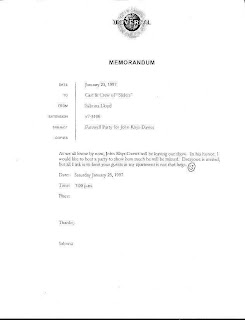
Done deal. Simple as that.
All these notes are from Public Relations Writing and Media Techniques by Dennis L. Wilcox.


Internet’s New Media comes along with:
widespread broadband
cheap/free, online publishing tools
mobile devices
Writing on the internet is completely different then print or broadcast. When writing for an online audience there are a few golden rules to remember:
1. write the way you talk- internet is like a casual conversation, where as print is like a novel.
2. keep it to one page per concept- internet has some kind of lazy-power. Readers don’t want to wait for page 2 to load... and they move on.
3. use bullet points, graphs, visuals, photos
4. Don’t overuse hyperlinks in text- use hyperlinks, but don’t OVER USE hyperlinks.
All these notes are from Public Relations Writing and Media Techniques by Dennis L. Wilcox.
Pr Rep vs. Journalist- Communications love and hate relationship.
Come on now, let’s all share and play nicely in the sandbox.
-BUT FIRST-
THE EASY PART... SENDING NEWS:
Top ways to get news into media outlets are to:
e-mail them
send them to online newsrooms
electronic newswires
placement firms
BUT, Always remember the following tips when sending news online:
PR vs. Journalists- Love Hate? or just Love to Hate?
Journalists views:
Journalists think Pr Representatives-
PR views:
PR Representatives think Journalist-
All these notes are from Public Relations Writing and Media Techniques by Dennis L. Wilcox.

Tweet on, readers. Tweet on.


It is already very apparent that digital media has begun to reign in media sources across the globe. On one hand I would like to be able to say that print media will always hold a place in our hearts-there’s just something about pen on paper that I tend to like for journaling, etc... On the other hand, however, I see concrete situations where print media is just nothing to write home about- it’s not as easy, convenient or light weight. It takes a lot of space to carry the notebook, the book, the pen, paper, highlighter and whatever else you plan on using, rather than just an ipad which does it all.

I am seeing these PR ads, printed by the top players in the print industry, such as Conde Nast, and I'm wondering if this is clearly one last attempt to reassure readers that they're not going anywhere- while ferociously creating magazine apps and such, of course, to go along with these ads (just in case, ya know).
There is a full article about this campaign, printed by PRNewswire.